



The rice paddy is such an archetypal attraction of the Bali tourist scene, its almost easy to forget that rice farming actually constitutes the livelihood of so many of its people.
Our villa is nestled in 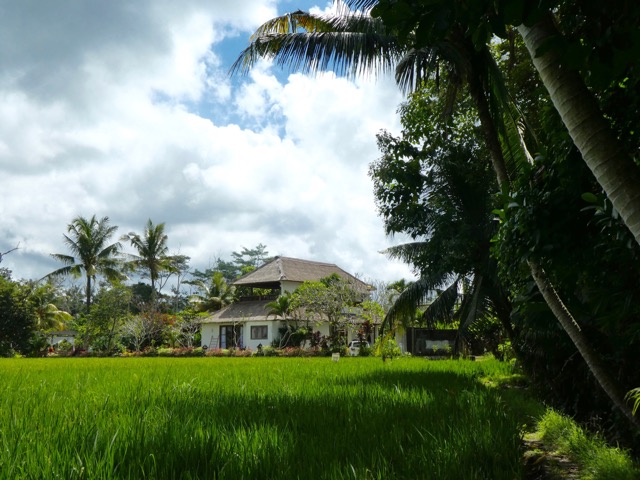

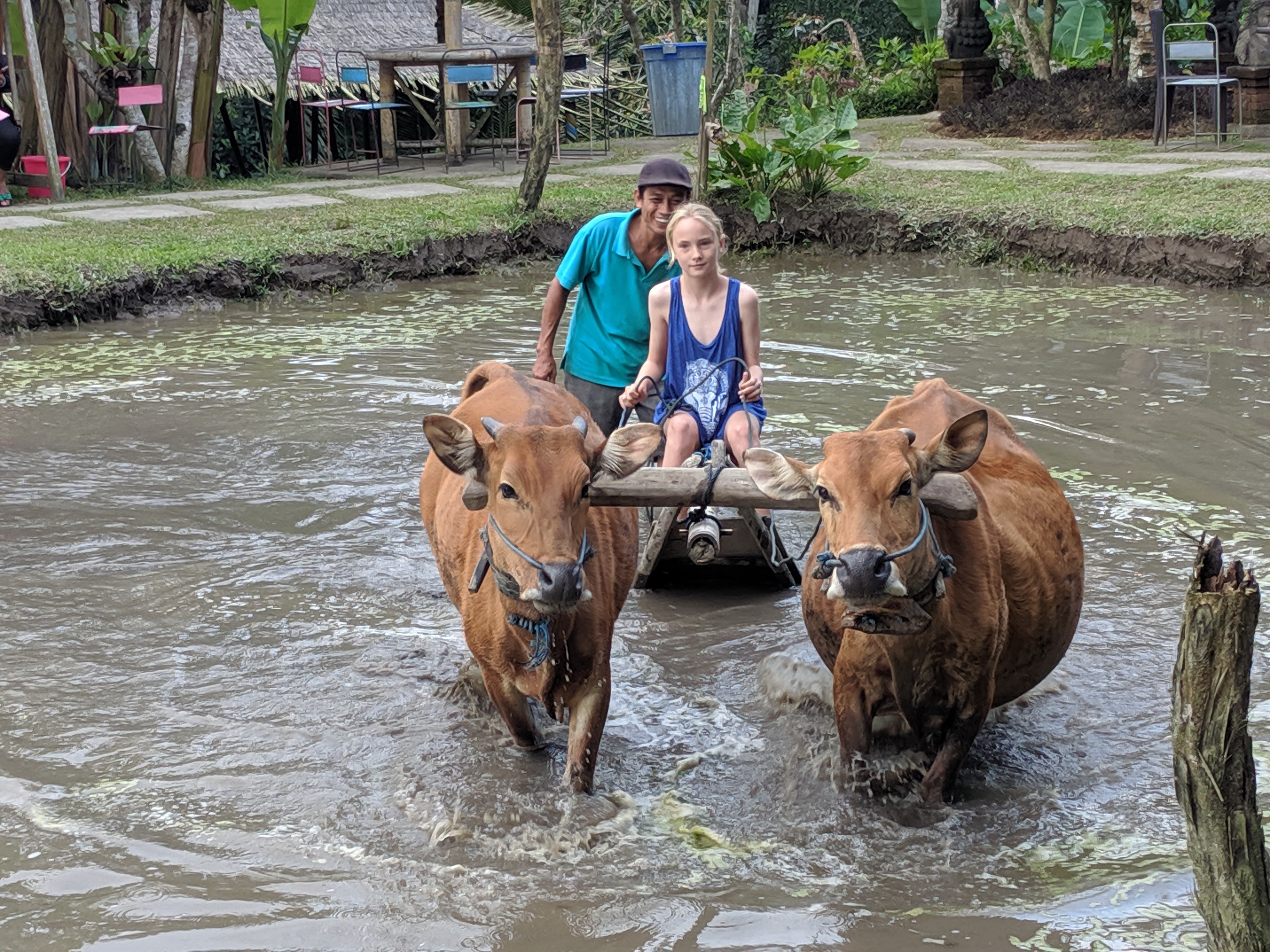
We found an (artificial yet fun and informative) way to experience rice farming ‘hands on’ for ourselves at Tampakspiring Journey. Despite turning up in our oldest clothes, ‘farming’ clothes were thrust upon us. We donned said Ganesha wifebeaters and shiny shorts with good grace, and got to it!
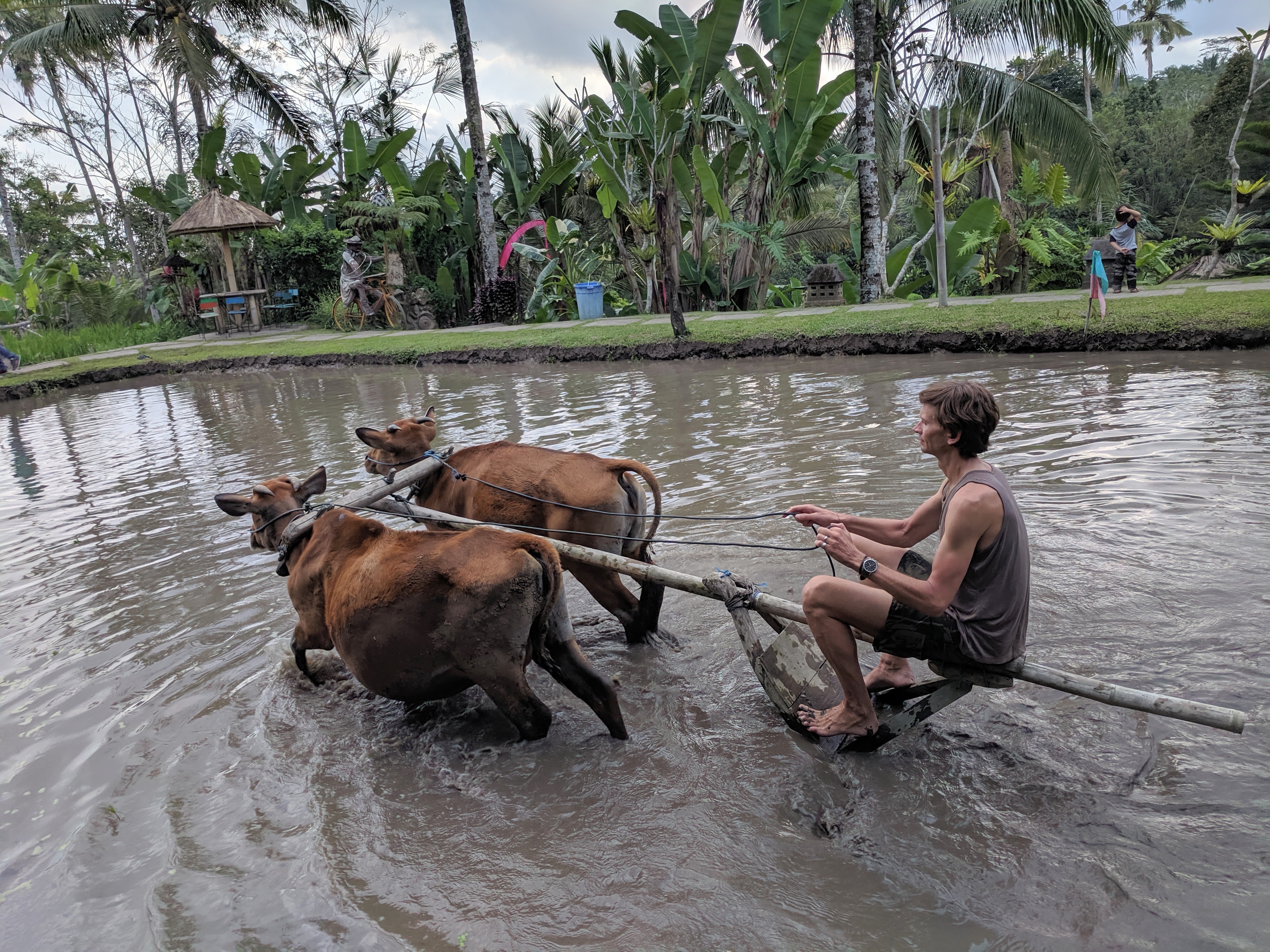
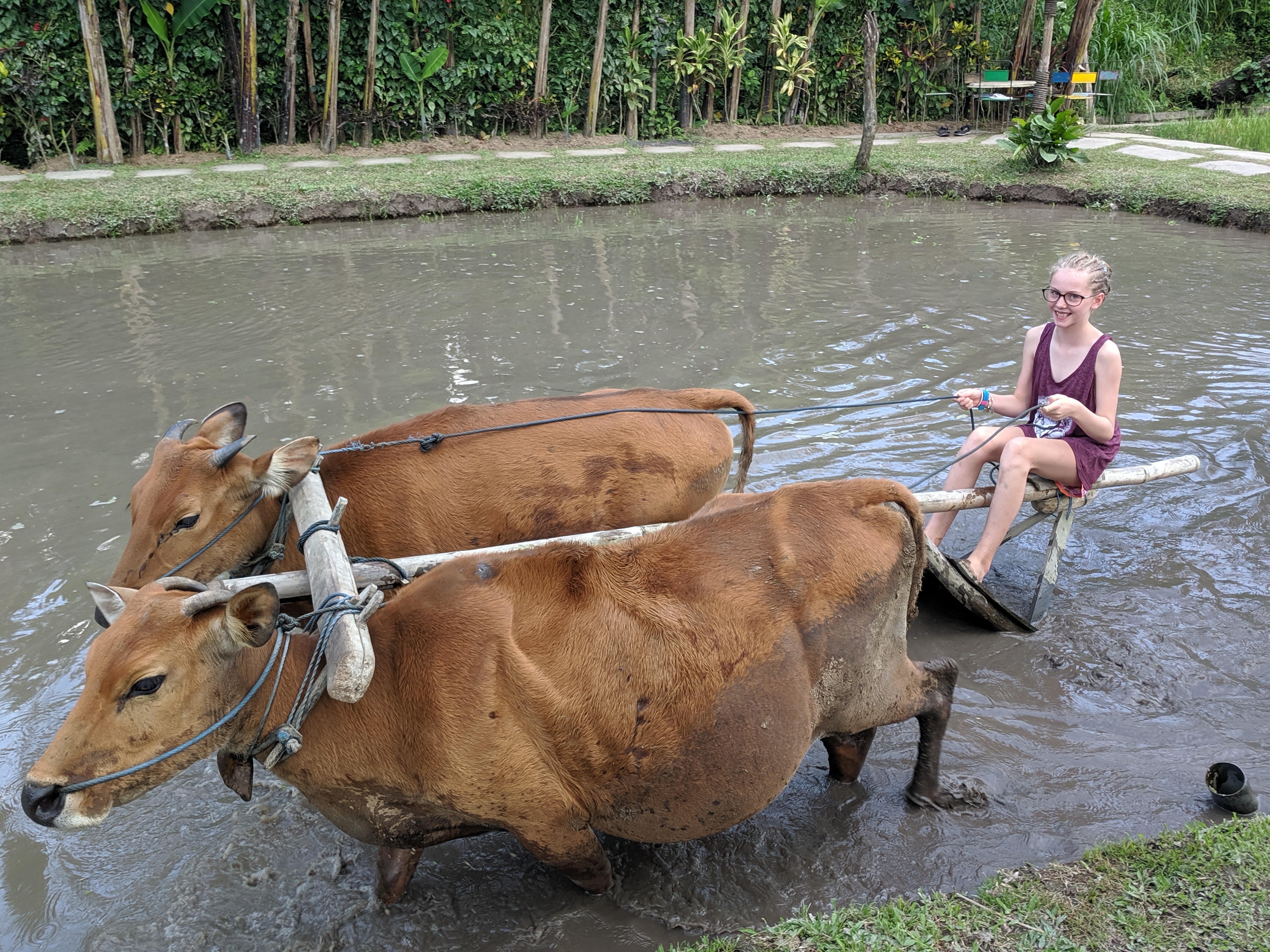
First up we had the experience of ploughing with cows. Cows and buffaloes are still used all over Indonesia, although newer machinery, some motorised are a beginning to become commonplace.





After ploughing farmers 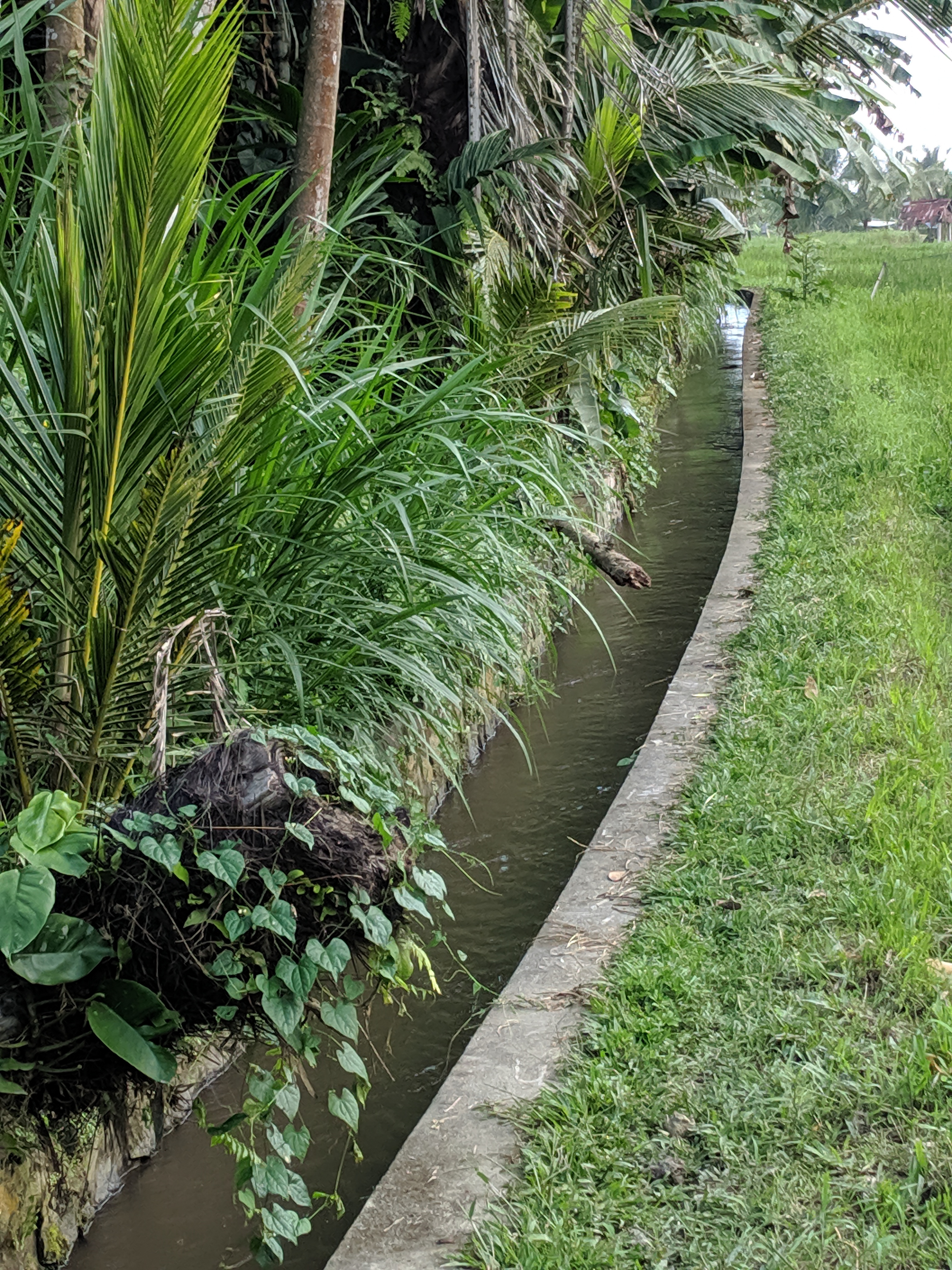

Subak (the all-encompassing water irrigation system) consists of forests that protect the water supply, the terraced paddy landscape, rice fields connected by a system of canals (like the one on the RHS), tunnels and weirs, villages and temples of varying size and importance that mark either the source of water or its passage through the temple on its way downhill to irrigate the land. This entire complex set of Subak elements are all managed communally in a way that binds Balinese agrarian societies together within geographic boundaries.
Once the water is sorted, the Balinese then wait for planting day. This will be a particular day determined by their calendar system which has been in place for more than a thousand years.
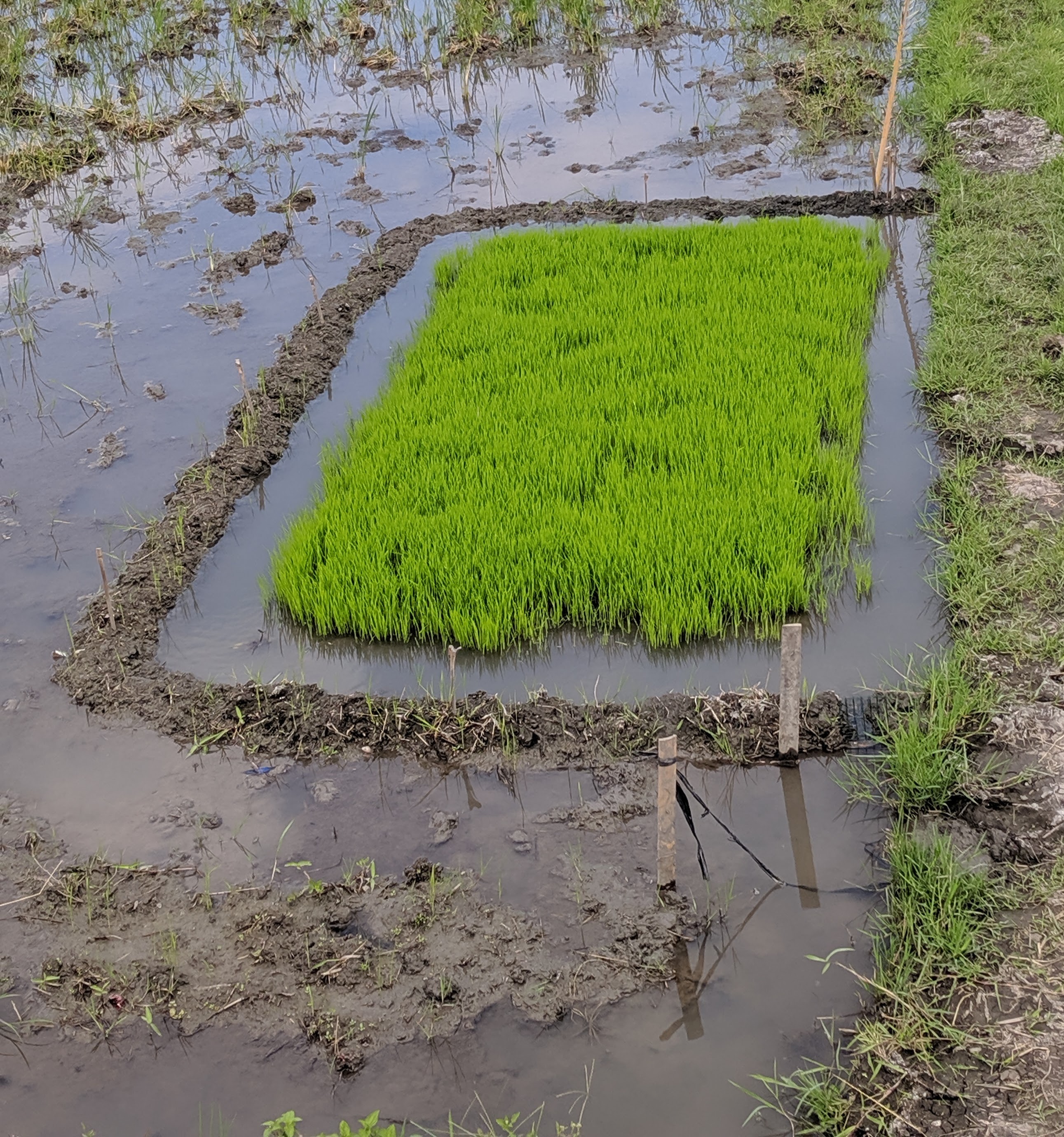

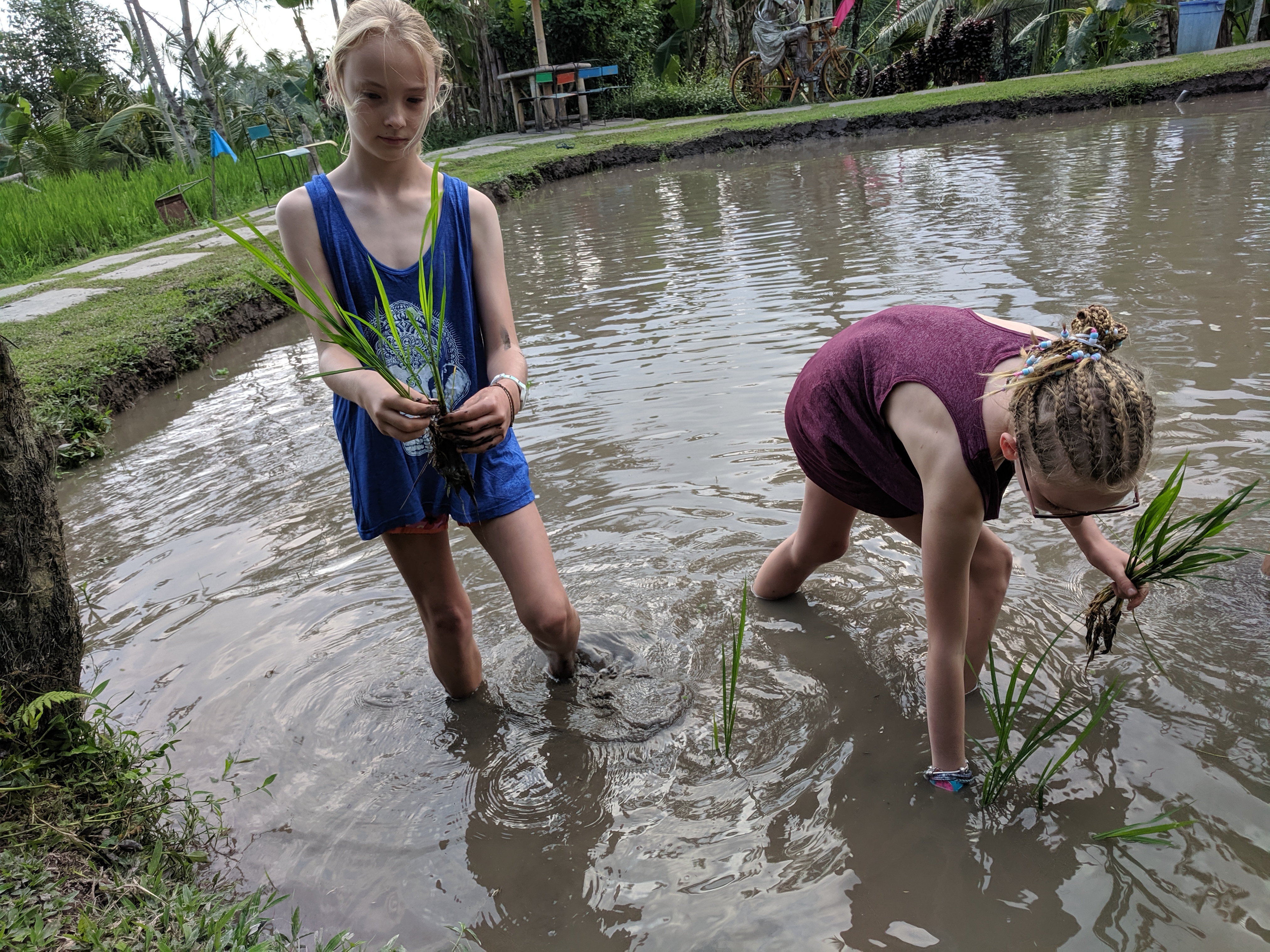
Our rookie efforts were fun but not neat enough to represent the real deal

Done properly the rice plants are re-sown in a uniform 10cm grid
We had fun with it though….


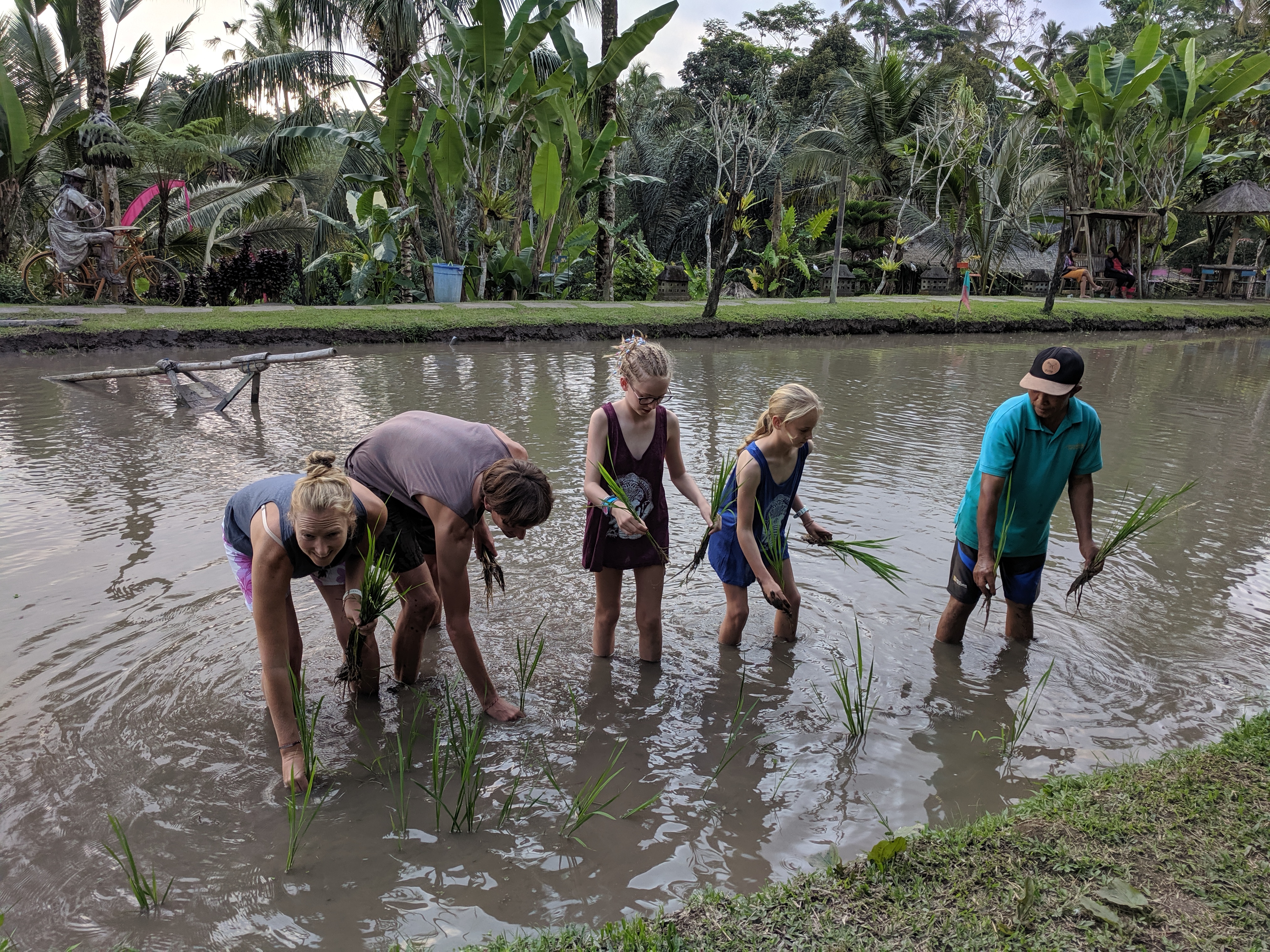
…..and enjoyed getting muddy!


Ritual and spirituality are integral to the cycle of growing and harvesting rice. Ceremonies and offerings to Dewi Sri (the goddess of rice and fertility) are performed throughout the year . Many ceremonies are performed on the farm, others at water temples.
-
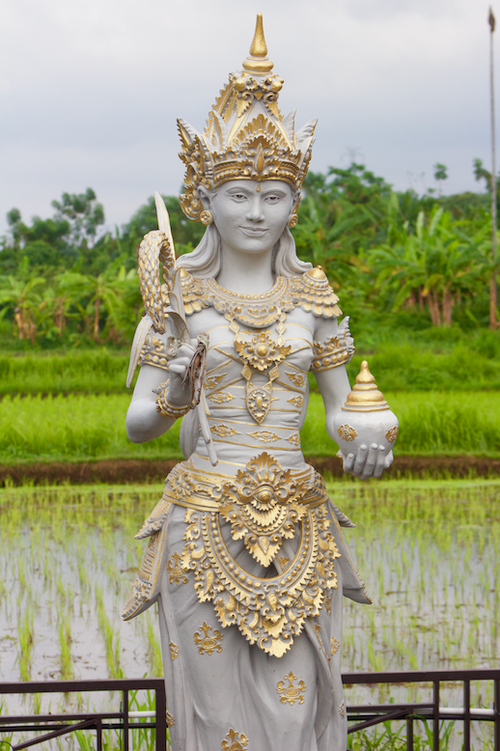
Dewi Sri

The upstream corner of every rice field is sacred. All the offering to Dewi Sri done on the farm are performed here. Before planting, the first stems of rice are ceremonially carried and planted in the part of the field that is closest to Mount Agung – considered sacred by the Balinese. All of hte rice produced from this corner of the field is also used as offerings to he goddess. When it is harvest time, the farmers create an image of the goddess out of some of this rice and give it as an offering to her

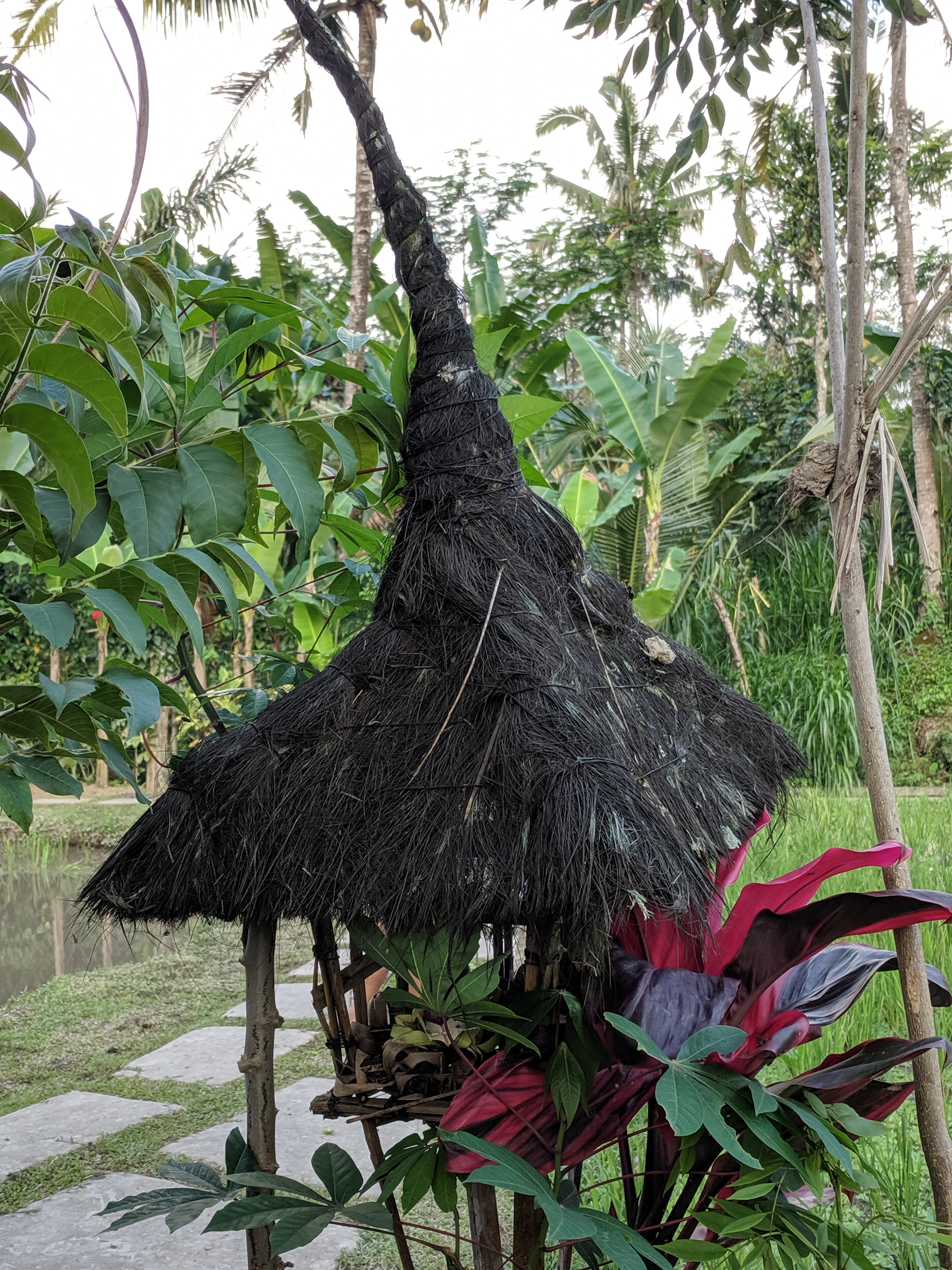
Field offering temple


Ripe rice paddy beside Villa Arcadia
Harvest is always still conducted by hand with scythes. We were privileged to witness the very first cuts in the very first cuts in the gorgeous paddy field next to our house, and there was such a party atmosphere between the villagers who collected to work together.
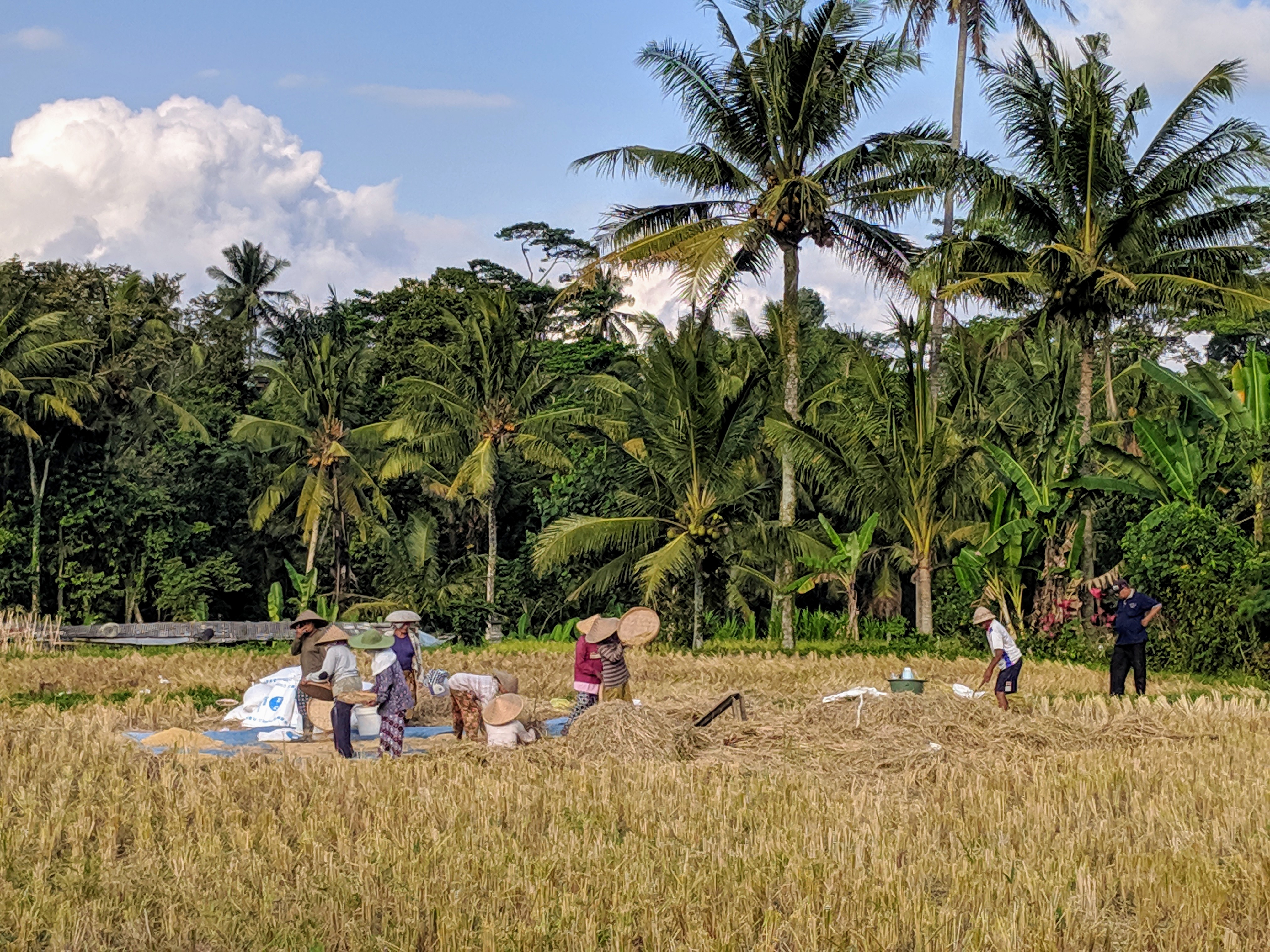
The grains are threshed out of the stems, again by hand, by beating them into a large bamboo tube, and then they are de-husked in local ‘factories’.

Ducks are put on the fields post-harvest to clean up any grains and worms or grubs. If a family doesn’t own their own, they borrow some!
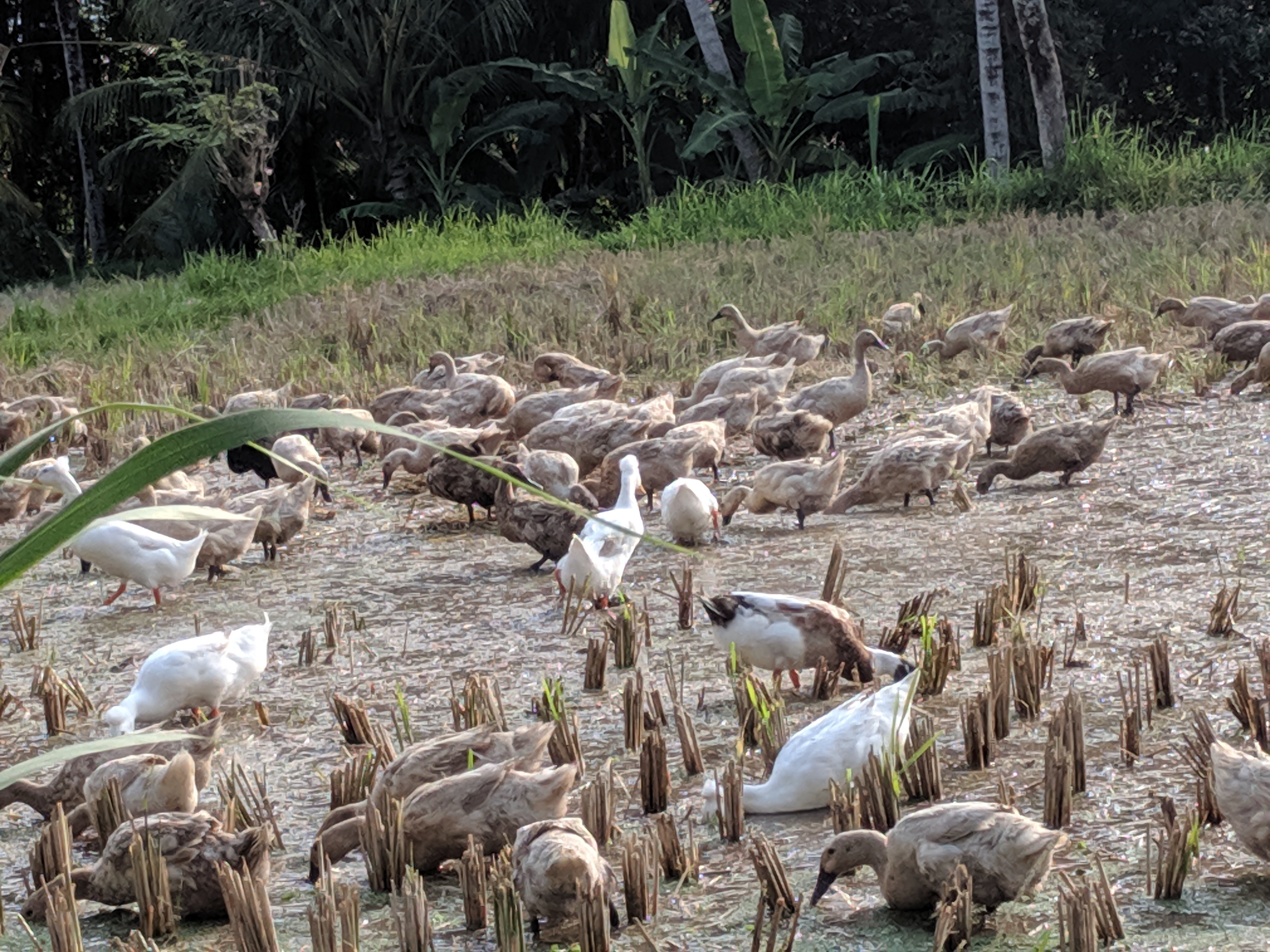
Nearly the entire rice plant is used for something, but lastly the final debris is burned.
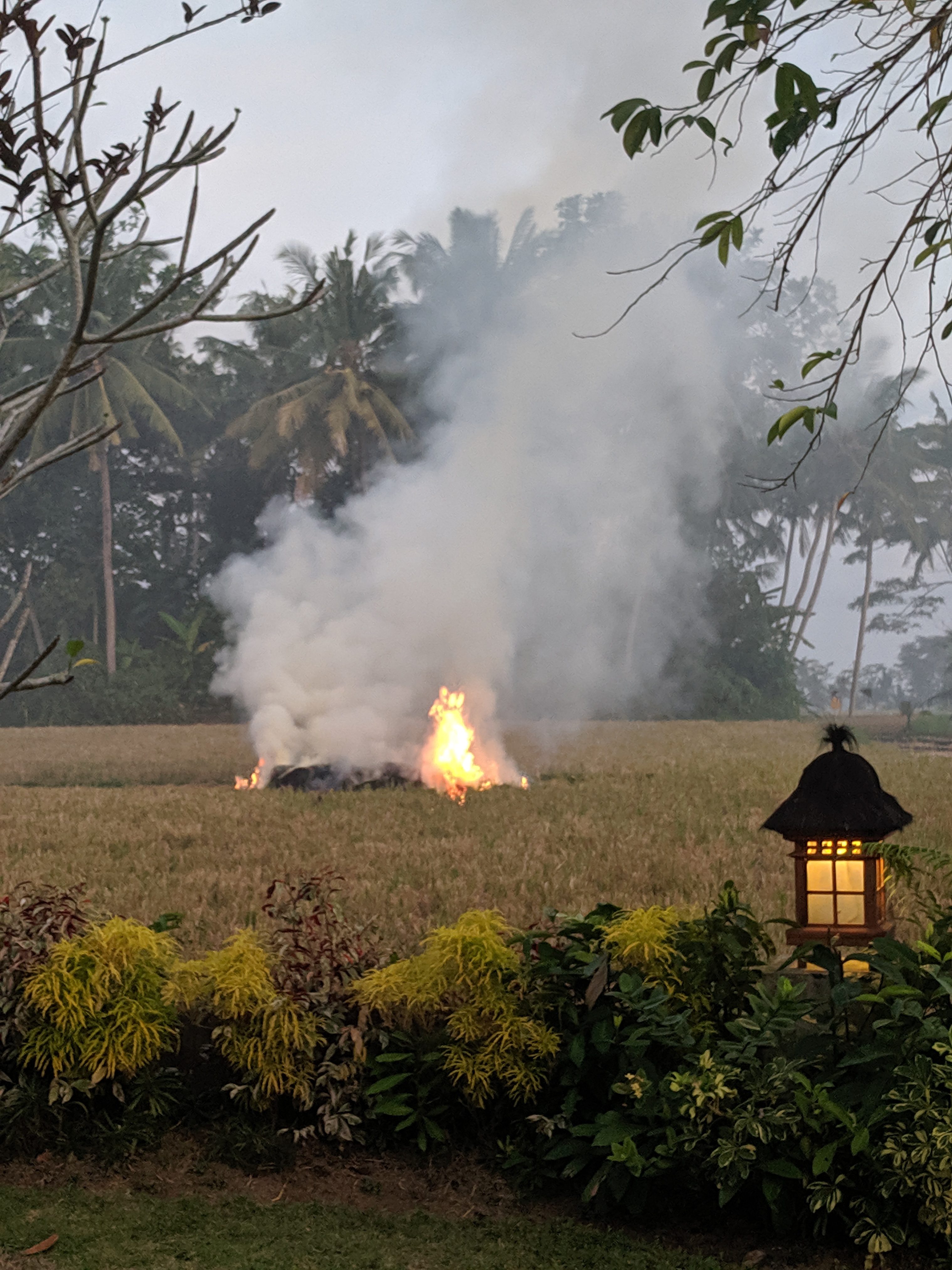
We got a bit smoked out a few nights at Villa Arcadia
Understanding this rice cycle certainly concentrates the mind when we are enjoying our nasi goreng (Indonesian staple dish of fried rice)! On a deeper level our exploration into rice growing certainly brings us closer to what feels like the true heart of Bali, along with the beautiful arts that we have been enjoying in this incredible country.